

Electrical safety is critical in homes, commercial buildings, and industrial plants. However, many professionals and end-users often confuse switches, circuit breakers, and isolators. Understanding the differences between these devices is essential for ensuring safety, reliability, and compliance in electrical systems.
This guide breaks down the key differences, their functions, and when to use each device in low-voltage (LV) systems.
What is a Switch?
A switch is a basic electrical device that connects or disconnects a circuit manually. Switches are the most common devices found in residential and commercial wiring.
Key points:
- Controls the flow of electricity to lights, fans, and small appliances.
- Does not protect the circuit against overloads or short circuits.
- Simple to install and use.
Example: Turning on a room light or fan with a wall switch.
What is a Circuit Breaker?
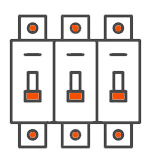
A circuit breaker is a protective device designed to automatically interrupt the flow of electricity in case of an overload or short circuit. It ensures safety by preventing damage to wiring and connected devices.
Types of circuit breakers:
- MCB (Miniature Circuit Breaker): For low-current residential circuits.
- MCCB (Molded Case Circuit Breaker): For higher current and industrial applications.
- RCCB (Residual Current Circuit Breaker): Protects against earth leakage.
When it’s used: Protecting circuits, equipment, and people from electrical faults.
What is an Electrical Isolator?
An electrical isolator is a device used to safely disconnect a circuit or equipment for maintenance or emergency purposes. Unlike circuit breakers, isolators do not trip automatically. They are manually operated and are essential for ensuring operator safety.
Types of isolators:
- Load Break Isolator: Can disconnect circuits under load safely.
- Modular Isolator: Compact and suitable for panel installations.
- Fused/Non-Fused Isolator: Offers additional protection in fused types.
Compliance: Most isolators meet IS/IEC 60947-3 standards for electrical safety.
Comparison Table: Switch vs Circuit Breaker vs Isolator
| Feature | Switch | Circuit Breaker | Electrical Isolator |
| Purpose | Connect/Disconnect | Protect circuit from overload | Safe manual disconnection |
| Operation | Manual | Automatic | Manual |
| Safety | Basic | High | High (for maintenance) |
| Application | Residential/Commercial | Residential, Commercial, Industrial | Industrial, LV Panels, Maintenance |
| Load Handling | Low | Medium to High | High |
When to Use Which Device
Residential Applications:
- Switches: Lights, fans, appliances.
- MCBs: Protect circuits in homes from overload.
- Isolators: Rarely needed, but may be used for larger equipment like solar inverters.
Commercial & Industrial Applications:
- Circuit Breakers: Protect machinery and panels.
- Isolators: Disconnect circuits safely during maintenance or emergencies.
- Switches: Local control for lighting and equipment.
Renewable Energy Applications:
- Solar PV & EV Charging: Load-break isolators are essential to safely disconnect DC circuits during maintenance or faults.
Conclusion
Understanding the differences between switches, circuit breakers, and isolators is crucial for safe and reliable electrical systems. While switches are for basic on/off control, circuit breakers protect against electrical faults, and isolators ensure safety during maintenance.
For high-quality, reliable isolators for residential, commercial, and industrial applications, consider Axiom ACE Isolators, designed to meet international safety standards and provide peace of mind for every electrical installation.